

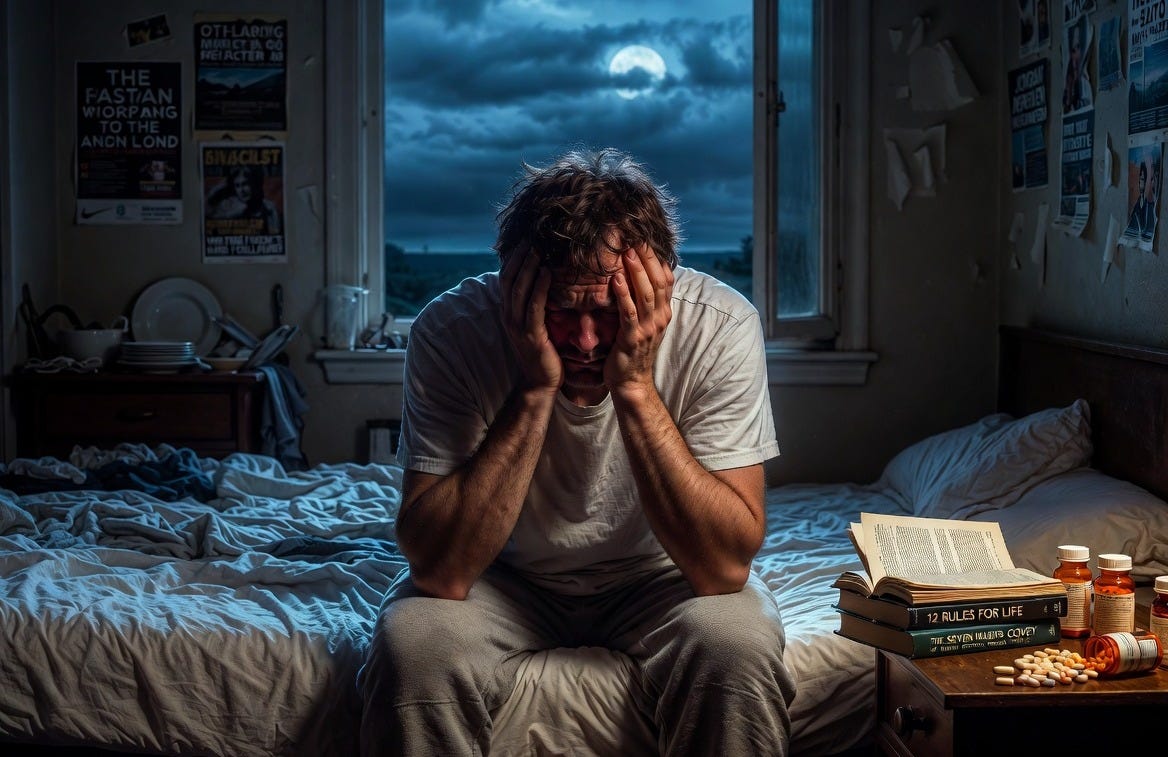
Anyone who’s done time in the trenches of the mental health system has probably seen some things. I certainly have. I’ve spent a fair bit of time on the lower rungs of that industry’s ladder and doing so has left me with more than my share of bizarre experiences.
I remember the out of control teenage boy at the group home who almost punched my 98 pound co-worker in the face when she caught him breaking a rule. I remember the giant of a kid whose parents lived in fear of him after he threatened to murder them both. I remember the guy who told me about the family of ghosts he talked to in the evenings when they would materialize in his bedroom. He welcomed them even though, he said, the kids were a little rowdy. I recall vividly sitting through rounds with a psychiatrist on the psych ward when a man was brought in complaining there were bees living under his skin. He slapped himself continuously.
There are some very disturbed people in the world. Sometimes, little can be done for them. Sometimes, medicine works wonders. My experience keeps me from being one of those people who say there’s no such thing as mental illness. I’ve seen too much to speak so boldly. Illness may be a crude metaphor for what is going on with these people, but it may be the best we have for describing those on the far fringes of thinking and behavior.
But, I’ve also seen enough to think the metaphor is increasingly being stretched beyond recognition. We now assume happiness and inner peace are the default human state. We’ve been convinced that normal human struggles: the sadness and anxiety that mark our lives are pathological rather than existential. We’ve been led to believe these constitute sickness rather than spiritual and emotional battle, that they are things to be cured with medicine, rather than reflection, silence, prayer and love. We are worse off for it. Our obsession with pathologizing everything has itself grown pathological.
I was reminded of all this recently when I read Carrie Weston Clark’s moving essay titled “How I Cured My Mental Illness.” In it, she describes a history of painful interactions with a mental health establishment that loaded her with labels but left her mostly unchanged. Eventually, she begins to wonder if maybe she isn’t mentally ill at all. This question catalyzes a healing journey for her outside the bounds of the system. Her quest begins in earnest when she purchases a copy of Jordan Peterson’s “12 Rules for Life”.
Carrie’s story is an extreme example of a cultural meme that affects us all: that deep emotional turmoil is a sign of mental illness requiring medical treatment rather than an inherent part of human life that requires the development of character to calm. It’s no accident that Carrie turned the corner when she read Peterson’s book. Something similar happened to me a generation earlier when I read Stephen Covey’s “The Seven Habits of Highly Effective People.” Both books ask why so many people are unhappy and propose an unorthodox answer, namely that disordered, undisciplined purposeless living exacerbates our default nervous state. When Peterson suggested the first step to a brighter outlook was not gulping down another pill, but to make your bed, he was saying what Covey said when he claimed the first principle of effective living is to be proactive.
Unfortunately, our society has gotten sadder and more anxious in spite of these occasional messages. As the idea that a low level of character, virtue and maturity can increase our unhappiness has faded, our need to explain why we feel unhappy in the first place has not. However, our culture now leaves us but one approved narrative for explaining this which is that we are mentally ill. The alternative, that we are miserable because our lives are disordered and out of alignment with the moral structure of reality, is condemned simplistic and judgmental which is too bad seeing as how it also happens to be true.
The end result is millions of people who think they’re mentally ill, but are, in reality, just stuck in the normal processes of development, people who don’t need prescription medication or weekly talk therapy. These are people whose anxiety emerges from tolerating problems they are perfectly capable of handling and whose depressions come from a sense of being unable to progress toward their goals and ideals. What they need is an education that helps them to see the links between the emotions they seem to experience passively and the choices they actively make.
This is a very different story from the one told by our medicalized mental health system and, dare I say, a more hopeful one. Rather than being a victim of a hard to diagnose and define illness, you may just need help working through the regular developmental roadblocks to full maturity we all face. It may not be that you need another pill so much as you need a role model, a mentor, a map. It may not be that you are crazy after all, you may just be human.
*Note: Carrie has agreed to be a guest on an upcoming episode of The Lamplighter Podcast, so keep an eye out for that.